
Gas fireplaces
Gas fireplaces in Montgomery County, MD — direct-vent, linear, and see-through
Most of what we sell is gas, and not because it’s fashionable: the venting run is short, the flame is there the moment you want it, and nothing has to be carried in or swept out. We pick the model that fits the wall you actually have, hand your builder the framing dimensions, and coordinate the order.
Get a free gas fireplace consultation
Send a photo of the wall or the existing fireplace
We’ll tell you what can vent there, which models fit, and what the whole job costs — not just the unit.- The gas lines we carry Majestic, Regency, Superior and Escea up front — most other major hearth brands on request.
- 21 years in the hearth industry Founder-led. You talk to Jesse Myers, not a call center.
- We sell and advise Hearth and gas work is licensed. It goes to installers we trust, and we lock in their price before you order.
- Montgomery County, MD By appointment — at your home or remotely with photos.
- Where we work By appointment across Montgomery County, MD — Potomac, North Potomac, Bethesda, Rockville, Gaithersburg, Germantown, Clarksburg, Poolesville, and Darnestown. Based in Boyds; no showroom.
Why gas wins most rooms
The short answer
is venting
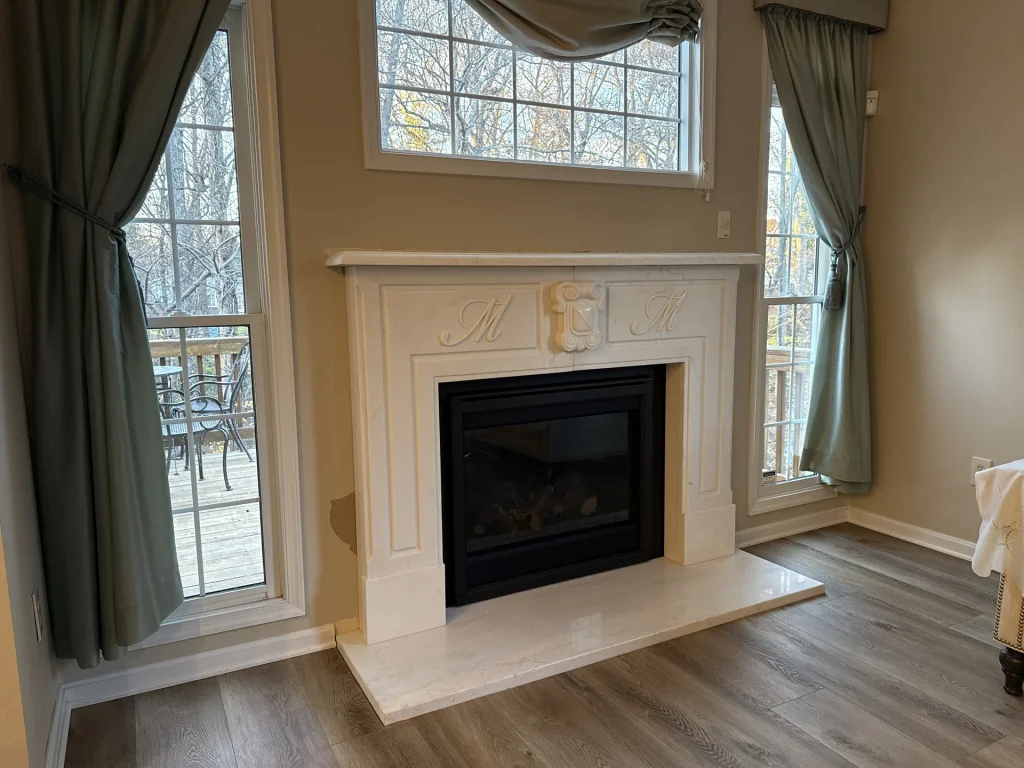
A gas fireplace goes where a chimney doesn’t. A sealed pipe takes combustion air in from outside and sends exhaust back out through the same run, so an exterior wall is enough — no masonry, no footing, no flue built on site. That one fact is why gas fits rooms that could never have a fireplace before: a bedroom wall, a basement, the back of a kitchen island. If you’re still deciding between the three fuels, we compared them here: gas vs wood vs electric for Montgomery County homes. If you already have an open masonry fireplace, the answer is probably a gas insert rather than a new firebox.
Before the model
Start with how it vents, not how it looks
Which units can physically go in your room is settled by venting, and that narrows the choice far more than style does. Get this right first and the rest is a question of taste and size; get it wrong and the unit you fell for can’t be installed at all. Four ways a gas fireplace deals with its exhaust, and what each one asks of the house:
- A direct-vent run is short by design — the shorter and straighter, the better it drafts.
- Linear models want a wider framed opening than they look like they need. We check framing before anything is ordered.
- Ignition decides whether it lights when the power is out. Electronic systems on the units we carry run on battery backup; a blower won’t.
| Venting | How it works | What it needs | Where it goes in |
|---|---|---|---|
| Direct vent | Sealed glass front. One pipe brings air in and takes exhaust out. | An exterior wall within reach, or a chase to the roof. | Most of what we sell — new walls, remodels, additions. |
| Power direct vent | A fan moves the exhaust, so the run can be longer and turn more corners. | Power at the unit and a longer pipe route. | Interior walls and basements with no short way out. |
| B-vent | Takes combustion air from the room, exhausts up a vertical flue. Front isn’t sealed. | An existing vertical flue in good condition. | Mostly replacements where the flue is already there. |
| Vent-free | Burns with no flue at all. An oxygen sensor shuts it down. | Nothing structural — room volume and local rules decide. | Rarely our recommendation. See below. |
About vent-free: everything that comes out of the flame stays in the room, including the moisture. What is permitted depends on the jurisdiction and on the room, and we check that before recommending one. In practice we have replaced more vent-free units with sealed ones than we have sold — the indoor/outdoor fireplace in the review on our fireplaces page was exactly that job.
Not sure anything can vent on that wall? A photo of the wall and the room is usually enough for us to say which venting types are open to you.
Send us the wallThe brands we carry for gas
Four lines, four different reasons
All four make a good direct-vent fireplace. They differ in what they are best at — which is the part worth knowing before you shop.
Majestic
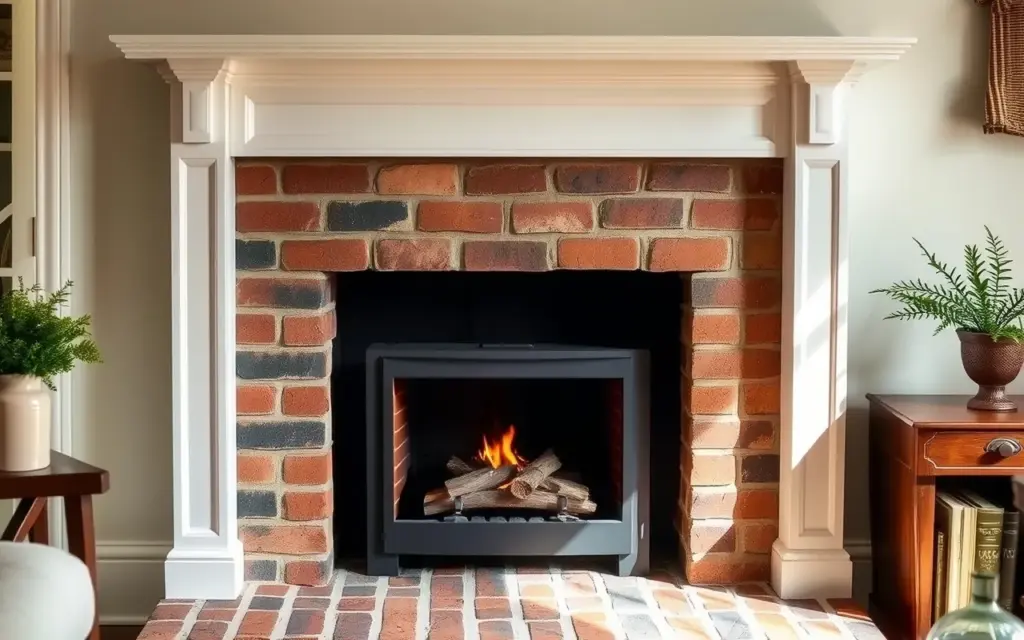
The widest range, from a traditional firebox behind a mantel to a 72-inch linear. Part of the largest U.S. fireplace maker, so parts and support are never a question.
Regency
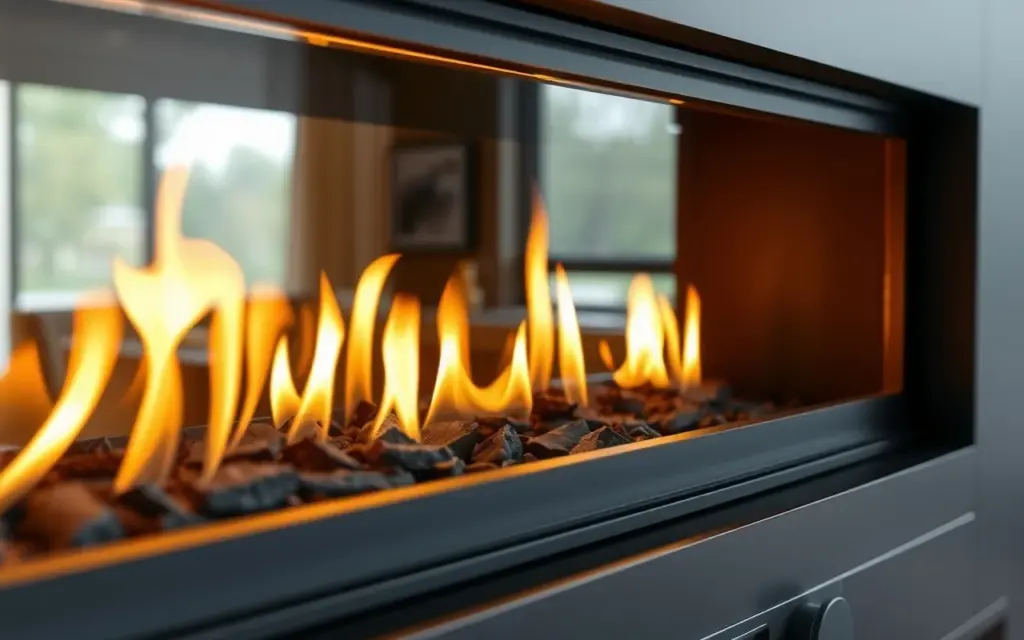
Built for heat first. The line is strongest where a fireplace has to actually warm the room it’s in.
Superior
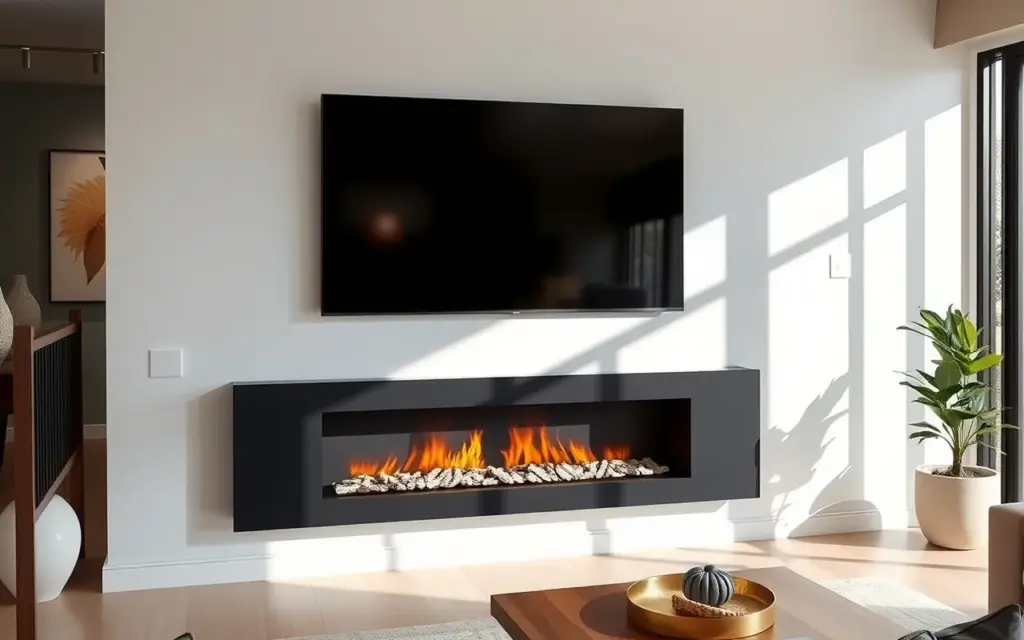
Value across a whole build. Traditional DRT and DRC families plus the DRL linears, sized from a bedroom to a great room.
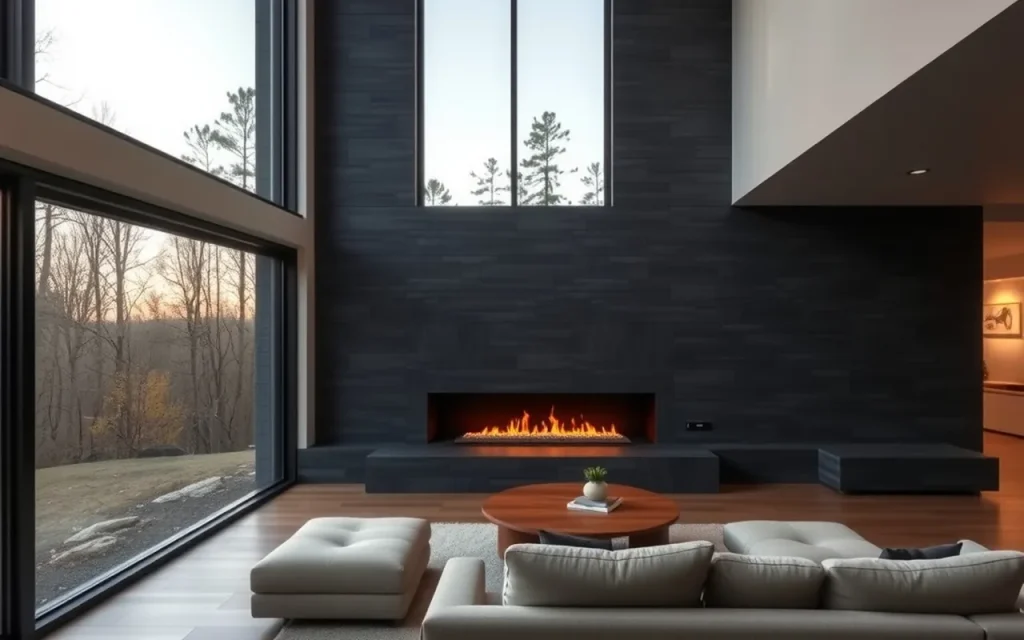
Escea
The install-freedom brand: vertical, horizontal or under-floor venting, and a zero-clearance rating that lets the surround be wood or drywall.
Majestic
Majestic — the widest range of the four
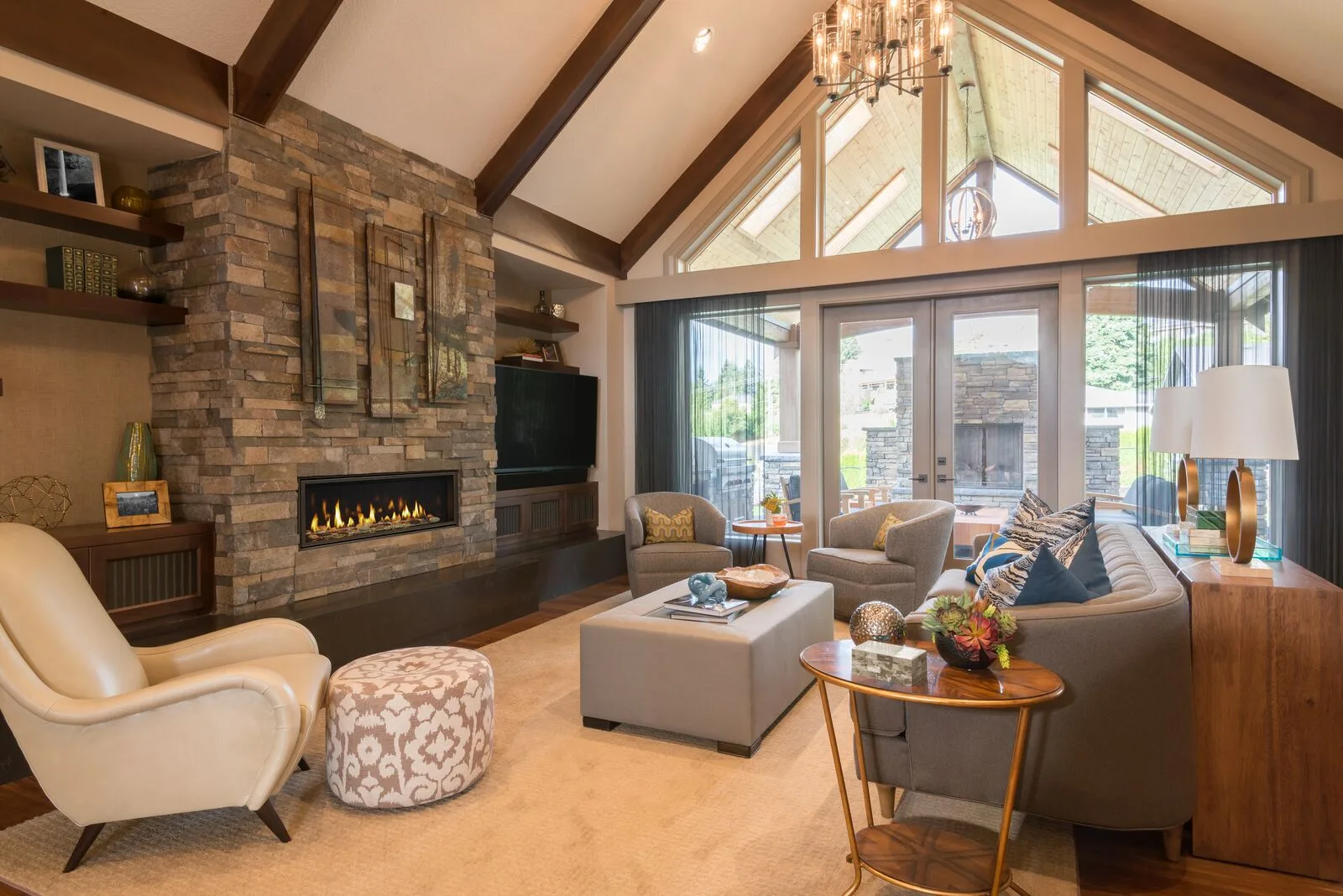
If there’s a size and a shape you have in mind, Majestic probably makes it: traditional fireboxes in three widths, see-through units that open to two rooms, and linear models up to six feet of glass. It’s part of Hearth & Home Technologies, the largest fireplace manufacturer in the United States, which matters in the dull but expensive ways — parts stay available and specifications are published for every revision. We’re an authorized Majestic dealer, so what you buy carries the factory warranty.
- Traditional, contemporary and linear in the same line, so one brand can cover a whole house.
- IntelliFire Touch on the upper models: wall switch, remote or thermostat, with battery backup on the ignition.
- Full documents — architect guides, CAD, CSI, and Revit — for the builder, on our page for builders and architects.
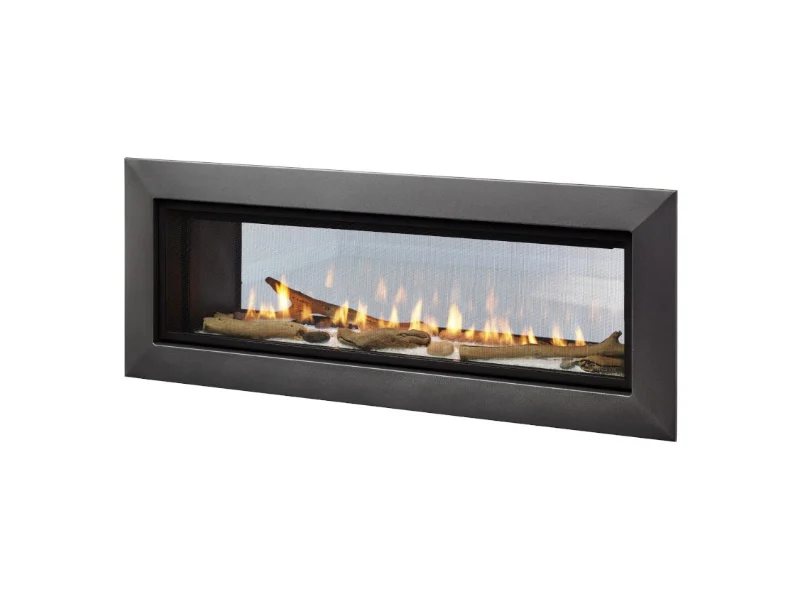
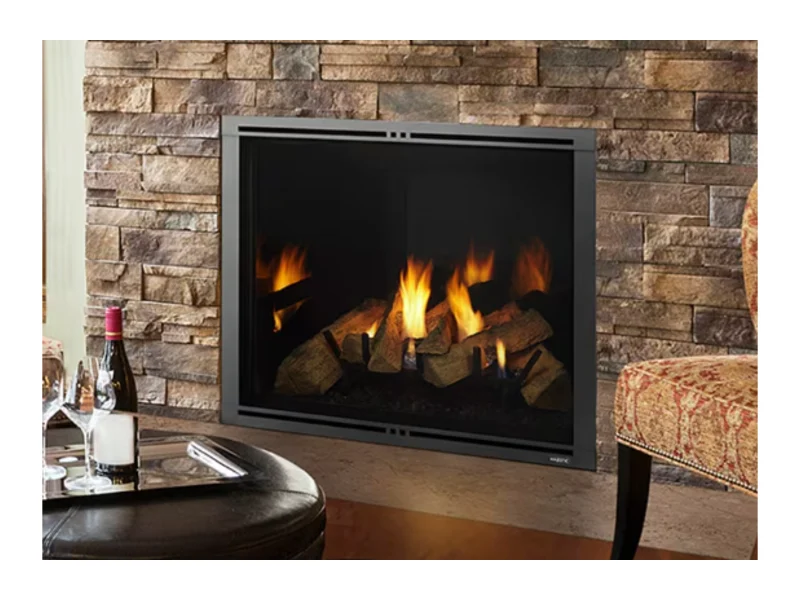
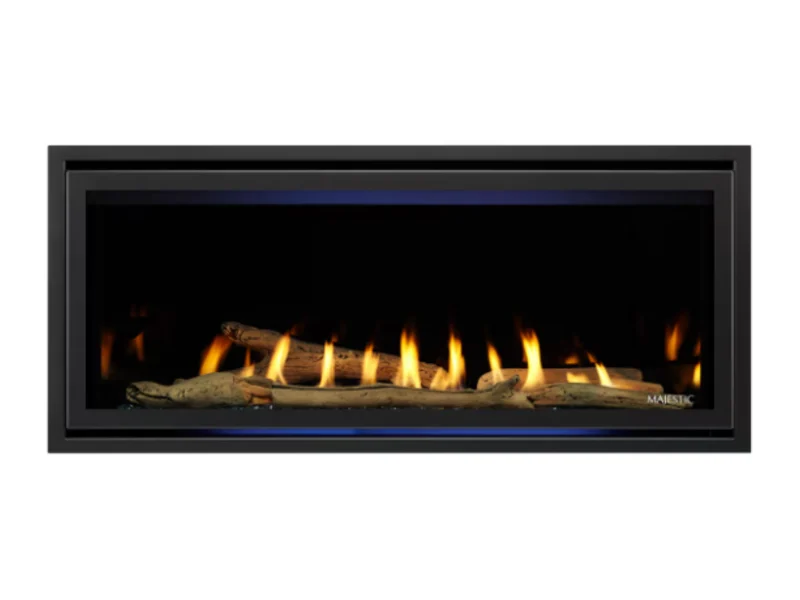
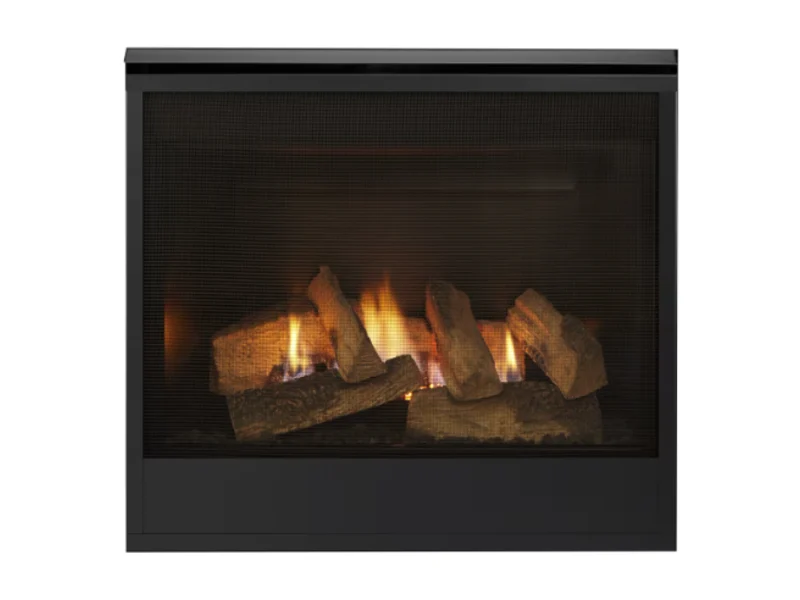
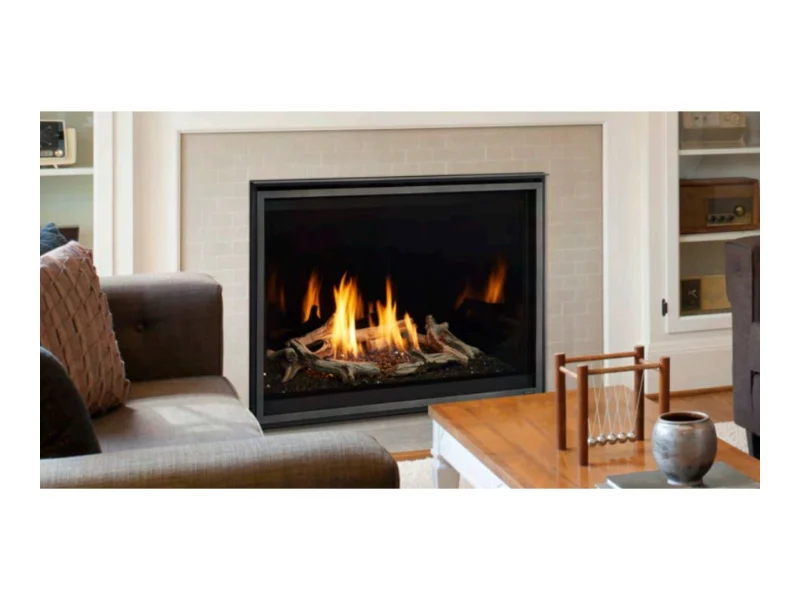
Want the widest choice of sizes? Tell us the opening you have in mind and we’ll send the Majestic models that fit it.
Ask about MajesticRegency
Regency — when the fireplace has to heat
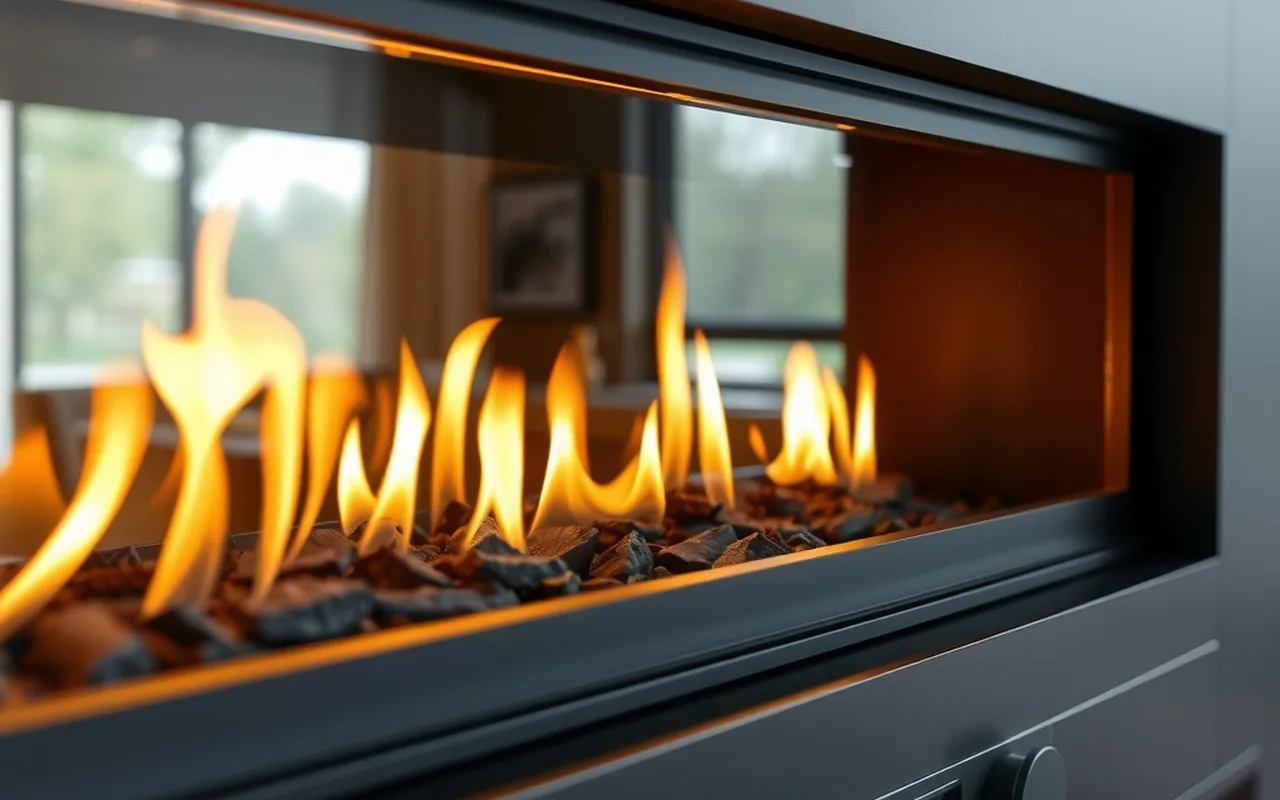
Regency is the line we reach for when the fireplace isn’t decoration. The gas units are built around heat output and the inserts are the strongest part of the catalog — an open fireplace that currently loses heat up the chimney becomes a sealed heater that warms the room it sits in. Lead times are usually the shortest of the four, about a week, though stock moves daily and we check before promising a date.
- Gas fireplaces and inserts, plus contemporary linear models for modern rooms.
- Also wood stoves and wood inserts, if the room turns out to want real fire — see wood-burning fireplaces.
- Outdoor gas fireplaces and fire tables built for the weather.
Want the fireplace to actually heat the room? Tell us what the room does today — that’s the question Regency is built for.
Ask about RegencySuperior
Superior — value across a whole build
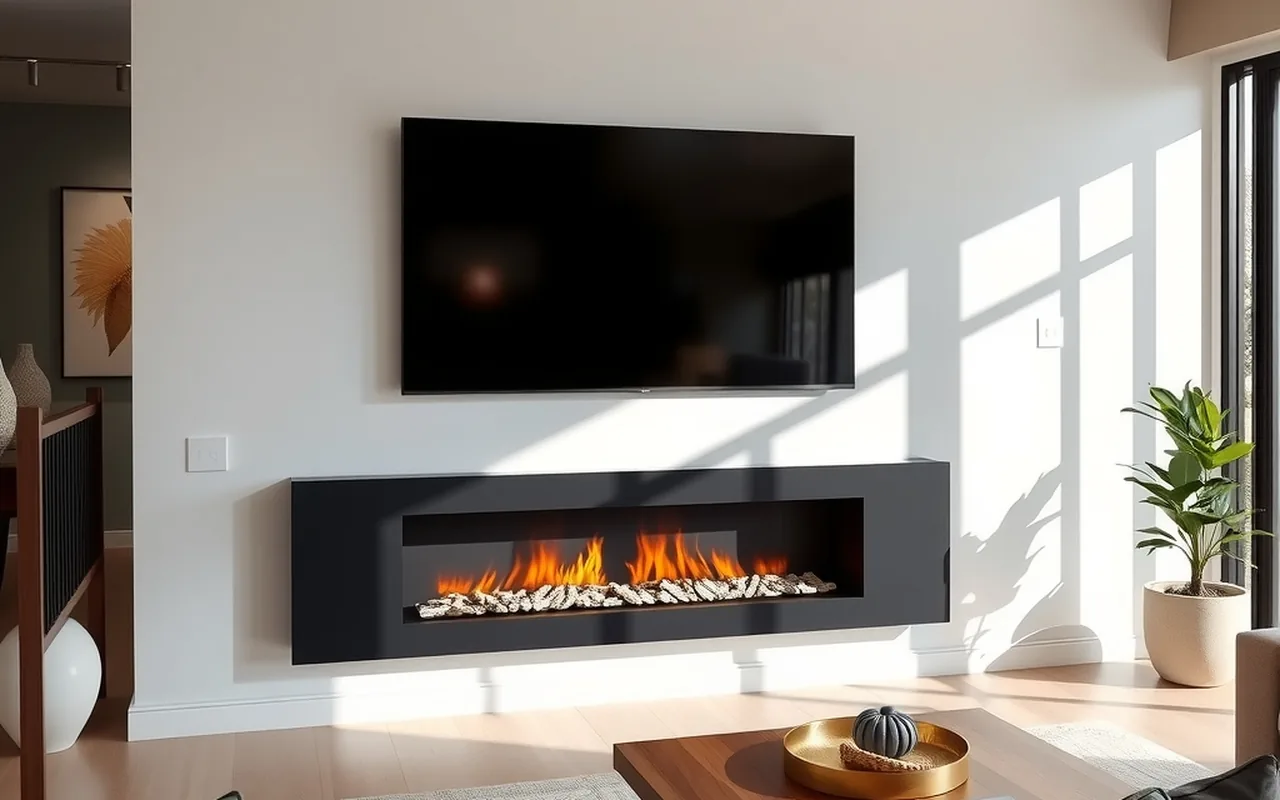
On a house with three or four fireplaces, Superior is usually the line that makes the budget work without the rooms looking cheap. The DRT and DRC families cover traditional proportions from a bedroom to a great room, the DRL series covers linear and see-through, and the gas log sets bring an existing masonry fireplace back to life for a fraction of a rebuild.
- Direct-vent traditional, linear and see-through in one catalog.
- Gas inserts and gas log sets for fireplaces that stay where they are.
- Outdoor gas and wood units rated for a covered patio.
More than one fireplace in the build? Send the plans and we’ll price the whole set rather than one room at a time.
Ask about SuperiorEscea
Escea — for the wall that has no way out
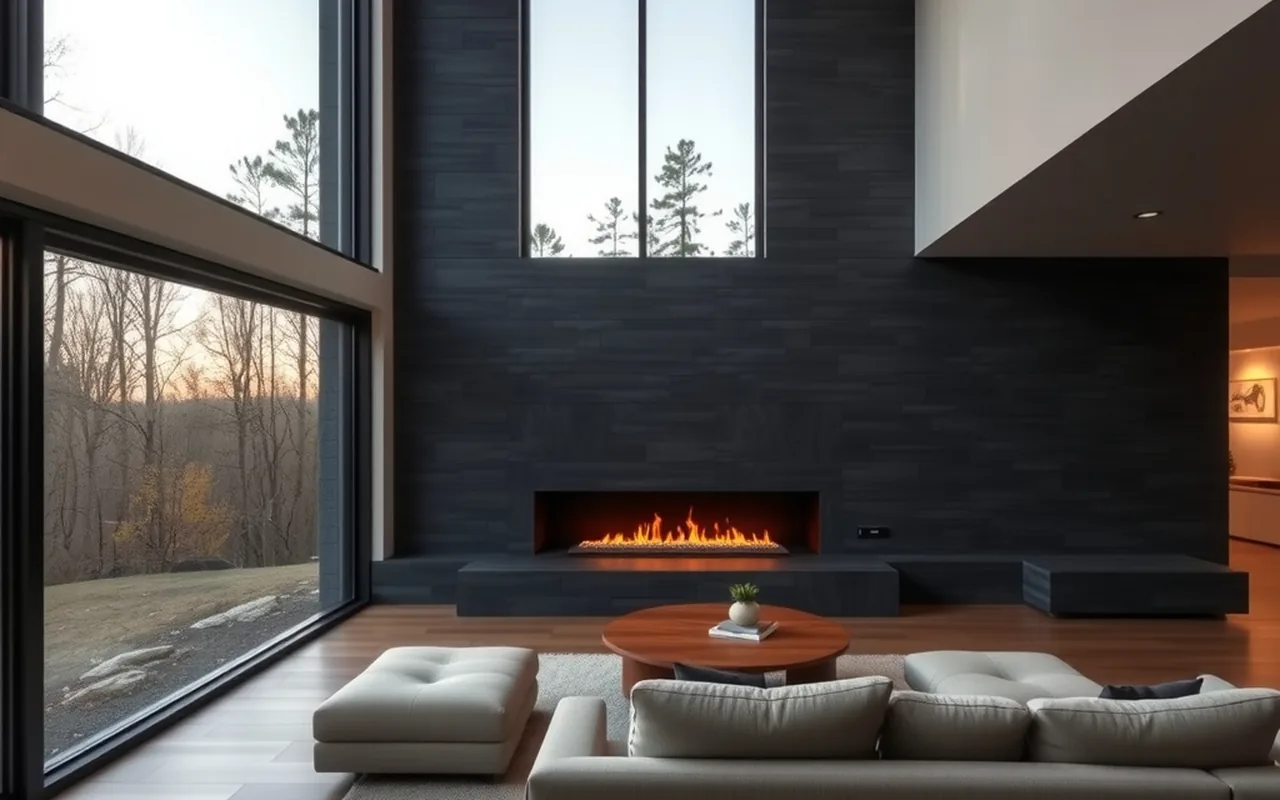
Escea exists for the rooms the other three can’t reach. Venting can run vertically, horizontally or under the floor, which solves interior walls with no exterior face, and the zero-clearance rating means the surround can be wood or drywall instead of stone. The NX series goes further and ducts the heat somewhere else — another room, or straight outside in summer.
- NB series: built-in gas with the No-Duct Heat System, single-sided or see-through.
- NX series: power direct vent with ducted heat distribution, frameless, two sizes.
- A TV can usually sit directly above the glass — one of the few lines where that’s designed in rather than hoped for.
Interior wall with no way out? Send a photo and we’ll tell you whether Escea’s venting solves it.
Ask about EsceaGas, but not a new firebox
Three other ways to get a gas flame
A built-in direct-vent fireplace is the answer when there’s a wall to work with. When there’s already a fireplace, or the fire belongs outside, these are the routes worth comparing first.
- Gas inserts — a sealed firebox that slides into the masonry opening you already have and vents up the flue through a liner.
- Gas logs — the lowest-cost way to put a flame in a working masonry fireplace, vented or vent-free.
- Outdoor gas fireplaces — from a 36-inch firebox in a stone surround to a six-foot linear on a covered patio.
Already have a fireplace? Send a photo of the opening with a tape measure across it — we’ll say whether an insert, a log set or neither is the right move.
Ask what fits the openingWhat a specialist does that a big-box aisle can’t
- Venting checked before anything else Where a unit can physically vent rules out more models than style does. That’s the first conversation, not the last.
- Framing dimensions to your builder Viewing area is the glass. Framing is the hole in the wall. We send the second one, in writing, before the wall closes.
- Permits already in the schedule Gas appliance permits go to WSSC Water; venting and structural work go to DPS. Your installer files them — we build the time into the schedule. Which agency issues what.
- Ignition explained before you buy Standing pilot or electronic changes how it lights, what it costs to idle, and what happens in an outage. What to check when it won’t light.
Not sure anything can vent on that wall? Send us a photo — we’ll tell you.
Good to know
Gas fireplace questions we hear every week
Do I need a chimney for a gas fireplace?
No. A direct-vent gas fireplace vents through a sealed pipe to an exterior wall or up through the roof, so no chimney and no masonry are required. That’s why gas fits rooms that never had a fireplace.
Will it work when the power goes out?
The fire will light. Electronic ignition systems on the units we carry have battery backup, and a standing pilot needs no power at all. What stops is the blower, so you get radiant heat rather than circulated heat. We confirm the backup on the specific model before you order.
Can a TV go above a gas fireplace?
Sometimes, and it depends entirely on the clearance to combustibles the manufacturer publishes for that unit. Escea’s NB and NX series are designed for it; many traditional fireboxes aren’t. Decide this before the wall is framed, not after the TV is mounted.
How much does it cost to run?
Less than most people expect, and it depends on the BTU input, how long you run it, and the gas rate. We put the fuel-cost comparison in writing here: gas vs wood vs electric. We do not publish unit prices — too much depends on the venting and the finishing to quote a number that means anything.
Do I need a permit in Montgomery County?
Yes, and it goes to two places: WSSC Water handles the gas appliance permit and inspection, Montgomery County DPS handles venting and structural work. Your installer files them. Fees and timing.
My gas fireplace smells on the first fire of the season.
Usually dust burning off the firebox and the heat exchanger, and it passes after a few hours of running. A smell of gas is a different matter and isn’t something to wait out: what each smell means.
Do you install?
No — Jesse isn’t a licensed contractor, and gas work has to go to someone who is. We line up an installer we have worked with, lock in their price before you order, then hand you the details. We take nothing for the installation: that contract is between you and them.
Which areas do you serve?
We sell and specify gas fireplaces across Montgomery County, Maryland — Potomac, North Potomac, Bethesda, Rockville, Gaithersburg, Germantown, Clarksburg, Poolesville, and Darnestown, and nearby communities. We’re based in Boyds, work by appointment, and don’t have a showroom: we come to the house, or work from your photos and plans. Not sure you’re in range? Ask and we’ll tell you straight.
Free consultation
Send us the wall
A photo of the wall or the existing fireplace, rough measurements, and whether gas already reaches the room. That’s enough for us to come back with two or three models that fit and a written quote.
Prefer to talk? Call 240-988-9177 · Serving Montgomery County, MD · By appointment